 Peliou

HDPE Ground Protection Mats- Safe Trak Mat System/Composite Molded Hdpe Road Mat
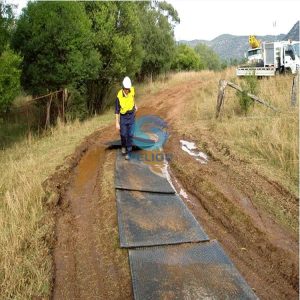
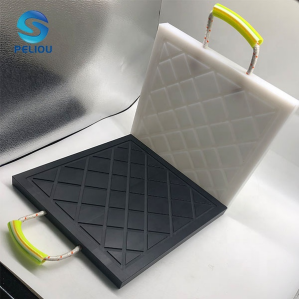
2004Light but heavy, the secret is HDPE(high density polyethylene) plastic. The Ground protection mats- safe trak mat is designed to bend without brea...
View detailsSearch the whole station Quick mat Video 产品分类菜单
Ground protection mats are essential equipment for construction projects, outdoor events, landscaping operations, and temporary access roads. Designed to create stable working surfaces over soft, muddy, or uneven ground, these heavy duty mats help protect the underlying terrain while providing reliable access for vehicles, machinery, and pedestrians.
Whether you are managing a large construction site, organizing an outdoor festival, or operating heavy equipment in challenging ground conditions, choosing the right heavy duty ground protection mats can improve site accessibility, reduce ground disturbance, and make temporary road construction more efficient.
Among the available materials, HDPE (High-Density Polyethylene) is widely used for ground protection applications because of its combination of impact resistance, durability, moisture resistance, and relatively low weight.
Ground protection mats are durable panels designed to create temporary access roads and protective working platforms on different types of terrain. They are commonly placed on grass, soil, mud, sand, gravel, and other surfaces to distribute vehicle loads and minimize damage to the ground.
These mats are particularly useful in locations where permanent road construction is impractical, expensive, or unnecessary. By connecting individual panels together, contractors can create temporary pathways for trucks, excavators, cranes, forklifts, and other heavy equipment.
Most modern ground protection mats are manufactured from high-density polyethylene (HDPE), a thermoplastic material known for its toughness, chemical resistance, and moisture resistance.
Key Point: Heavy duty ground protection mats provide a reusable surface solution for temporary roads, construction access routes, equipment staging areas, and outdoor event spaces.
Ground protection mats work by distributing concentrated loads over a larger surface area. Instead of allowing vehicle tires or equipment tracks to apply pressure directly to soft soil, the mats help spread the load across the supporting ground.
This can reduce rutting, sinking, soil compaction, and surface disturbance when the mats are correctly selected and installed.
Construction sites and outdoor event locations often have challenging ground conditions. Rainfall, soft soil, uneven terrain, and repeated vehicle movement can make it difficult for equipment to operate safely and efficiently.
Without proper ground protection, heavy vehicles may become stuck, grass and landscaping may be damaged, and construction operations may experience unnecessary delays.
Temporary road mats provide a practical solution to these challenges.
Ground protection mats help prevent direct contact between vehicle tires and the underlying surface. They are especially valuable when working on lawns, landscaped areas, parks, and environmentally sensitive locations.
Temporary access roads allow trucks and machinery to move across areas that would otherwise be difficult to access. This is particularly important during wet weather or when construction sites have limited permanent infrastructure.
Compared with building permanent access roads, temporary ground protection systems can reduce the need for extensive excavation, aggregate placement, and restoration work. Actual savings depend on site conditions and project requirements.
Heavy duty ground protection mats are designed to distribute loads across a wider area, helping support vehicles and machinery on soft or unstable ground. Their actual load capacity depends on material, thickness, panel design, ground conditions, and support configuration.
HDPE ground protection mats offer good resistance to abrasion, impact, and repeated mechanical use. This makes them suitable for demanding environments where equipment frequently travels over temporary access routes.
Unlike many wood-based temporary road products, HDPE mats do not absorb water in the same way. They are suitable for wet working environments and can be cleaned after use.
One of the main advantages of reusable ground protection mats is that they can be transported between projects and used repeatedly when properly maintained. This can help reduce long-term material costs for contractors and event organizers.
Many HDPE ground protection panels are designed with manageable dimensions and optional connection systems. Depending on the product design, mats can be installed, removed, and relocated using manual handling equipment or machinery.
HDPE is resistant to many common chemicals and does not rust or corrode. This makes it a practical material for construction, industrial, and outdoor applications.
Heavy duty temporary road mats are used across multiple industries. Their versatility makes them a popular choice for temporary access and ground protection projects.
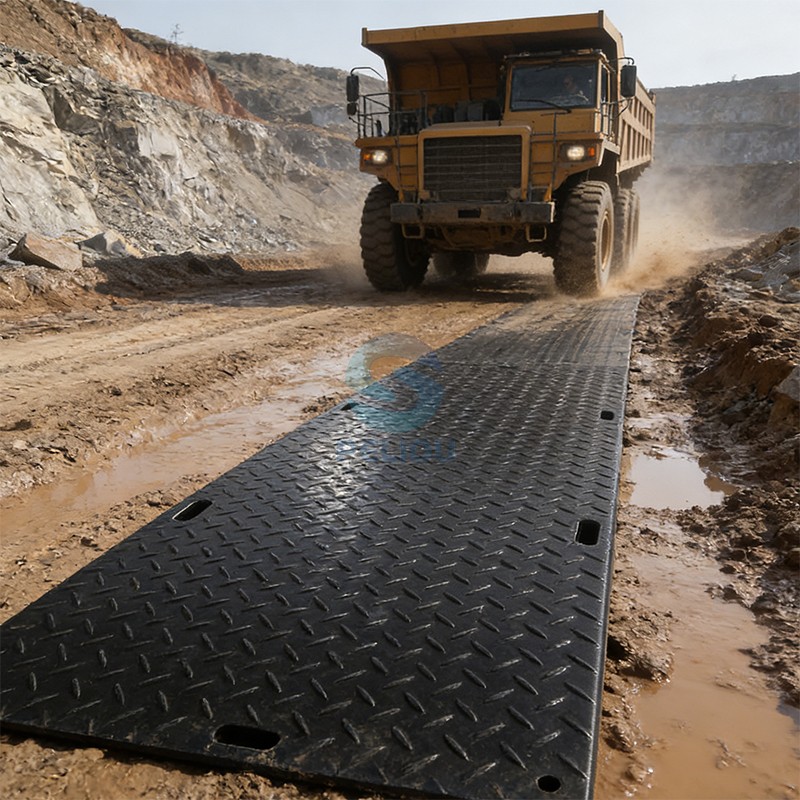
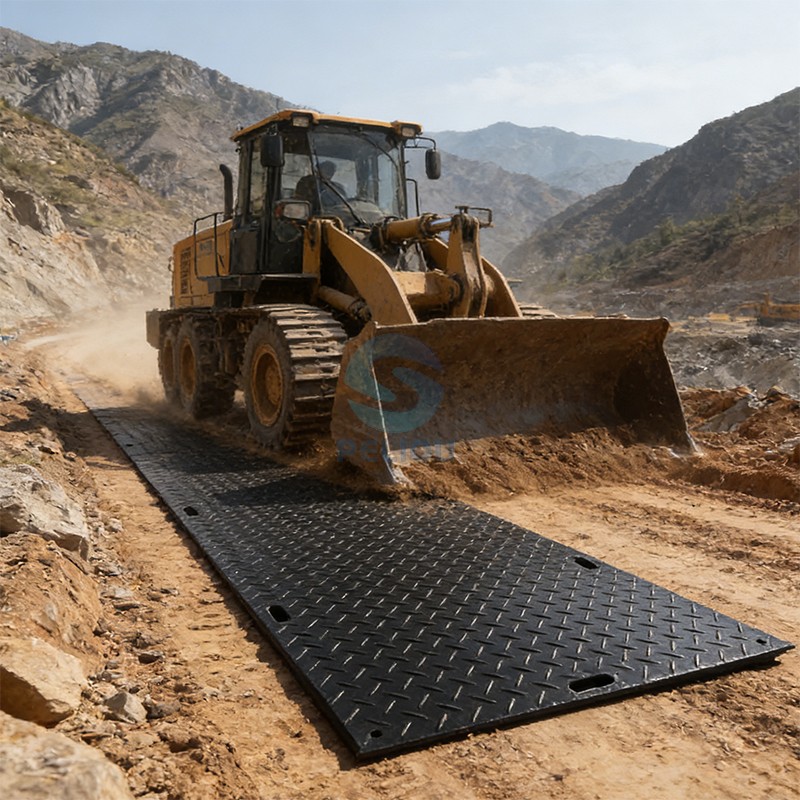
Construction ground protection mats are frequently used to create temporary roads for dump trucks, excavators, concrete trucks, cranes, and other construction machinery.
They help improve vehicle access while protecting existing soil and surrounding surfaces. They can also be used in temporary equipment storage and material staging areas.
Ground protection mats for events provide temporary pathways for visitors, service vehicles, emergency access, and event equipment.
They are useful for music festivals, sporting events, exhibitions, concerts, agricultural shows, and outdoor public gatherings where grass and soil need protection.
Landscaping contractors often need to move machinery across lawns, gardens, and parks. Ground protection mats help reduce surface damage caused by wheel loads and equipment movement.
Temporary access mats can support site preparation and equipment movement in remote industrial locations. They are useful where permanent road infrastructure is limited or unavailable.
Utility companies can use temporary road mats when accessing pipelines, underground cables, drainage systems, and other infrastructure installations.
In agricultural environments, ground protection mats can provide temporary access for tractors, transport vehicles, and maintenance equipment, helping reduce rutting in soft ground.
The material used to manufacture ground protection mats has a direct influence on durability, weight, load performance, maintenance, and service life.
Common material options include HDPE, UHMWPE, and wood-based products.
High-density polyethylene is one of the most common materials for reusable plastic ground protection mats. It offers a balance of toughness, impact resistance, moisture resistance, and processing flexibility.
HDPE mats are suitable for many construction, landscaping, and event applications. They can also be manufactured in different sizes, thicknesses, colors, and surface patterns.
Ultra-high molecular weight polyethylene (UHMWPE) is known for its excellent abrasion resistance, impact strength, and low coefficient of friction.
UHMWPE may be considered for specialized applications that require enhanced wear performance. However, material selection should be based on the project’s operating conditions and cost requirements.
Wooden mats are traditionally used in heavy construction and industrial access applications. They can provide substantial structural support, but their weight, moisture absorption, maintenance requirements, and susceptibility to deterioration should be considered.
| Material | Main Advantages | Typical Considerations |
|---|---|---|
| HDPE | Impact resistance, moisture resistance, reusable | Load performance depends on panel design and thickness |
| UHMWPE | Excellent abrasion resistance and impact performance | Usually higher material cost |
| Wood | Traditional structural matting solution | Heavy, moisture absorption, maintenance requirements |
Ground protection mats are available in different designs to meet different site conditions and load requirements.
Heavy duty mats are designed for demanding applications involving trucks, excavators, cranes, and other heavy equipment. They generally feature thicker panels or reinforced structural designs.
Temporary road mats are used to create access routes across soft soil, muddy areas, and uneven terrain. They are commonly installed in connected rows to form continuous vehicle pathways.
Lightweight mats are easier to transport and handle. They are often used for pedestrian pathways, landscaping, light vehicles, and event access routes.
Interlocking mats feature specially designed edges or connection systems that help keep individual panels aligned. They are suitable for creating larger temporary working surfaces and access roads.
Selecting the right ground protection mats requires evaluating several factors. The best solution depends on the type of equipment, ground conditions, project duration, and expected traffic volume.
Determine the maximum vehicle weight, axle loads, wheel loads, and equipment type that the mats need to support. Do not rely on a general load capacity claim without checking the manufacturer’s test conditions.
Mat thickness affects stiffness, handling weight, and load distribution performance. Thicker mats may be more suitable for demanding applications, but the correct choice depends on panel design and ground support.
Consider whether the installation area consists of soft soil, mud, sand, grass, gravel, or uneven terrain. Extremely soft or saturated ground may require additional site preparation or a different mat configuration.
A textured or patterned surface can improve traction for vehicles and pedestrians. Consider the operating environment, weather conditions, and equipment type when selecting the surface design.
Larger mats may cover more area per panel, while smaller panels may be easier to handle in restricted spaces. Connection systems can also improve alignment and installation efficiency.
For contractors handling multiple projects, reusable HDPE ground protection mats can be a practical long-term investment. Ask suppliers about material quality, UV stabilization, available testing, and expected service conditions.
Proper installation and maintenance are important for maximizing the performance and service life of ground protection mats.
Traditional temporary access roads may use gravel, crushed stone, timber, or other construction materials. Plastic ground protection mats offer an alternative that can be particularly useful when temporary installation and removal are important.
| Comparison Factor | Plastic Ground Protection Mats | Traditional Gravel Roads |
|---|---|---|
| Installation | Can be installed as modular panels | Requires material placement and leveling |
| Removal | Panels can be removed and reused | Requires excavation or material removal |
| Ground Protection | Helps distribute surface loads | Can require extensive ground preparation |
| Transportation | Panels can be stacked and transported | Requires bulk aggregate transportation |
| Reuse | Designed for repeated use | Depends on material recovery and project conditions |
The most suitable option depends on the project budget, ground conditions, vehicle loads, installation period, and restoration requirements.
Ground protection mats are used to create temporary roads, working platforms, pedestrian walkways, and equipment access routes. They help protect soil, grass, and other ground surfaces from damage caused by vehicles and heavy machinery.
HDPE is a popular choice because it offers a combination of durability, impact resistance, moisture resistance, and reusability. UHMWPE can also be considered for specialized applications requiring excellent abrasion resistance.
Yes, appropriately designed heavy duty ground protection mats can be used under trucks and construction machinery. However, the actual load capacity depends on material properties, panel thickness, structural design, ground conditions, and load distribution. Always confirm the manufacturer’s specifications before use.
HDPE has very low water absorption and is suitable for wet outdoor environments. Its moisture resistance makes it a practical material for temporary road and construction ground protection applications.
Yes. Many plastic ground protection mats are designed for repeated installation and removal. Regular inspection, proper cleaning, and suitable storage can help extend their service life.
Yes. They are commonly used at festivals, concerts, sporting events, exhibitions, and outdoor gatherings to create temporary walkways and protect grass or soil from foot traffic and service vehicles.
The appropriate thickness depends on the expected vehicle loads, ground conditions, panel dimensions, and product construction. Contact the manufacturer with your application details to obtain a suitable recommendation.
Many manufacturers offer customization options, including dimensions, thickness, colors, surface textures, and connection designs. Custom solutions can be developed according to specific project requirements and production capabilities.
When sourcing ground protection mats, choosing an experienced plastic material manufacturer is important for ensuring consistent product quality and reliable supply.
Hebei Peliou New Materials Technology Co., Ltd. focuses on plastic material solutions and provides customers with products for industrial and outdoor applications.
We understand that different projects have different requirements for material properties, dimensions, thickness, and performance. Our team can communicate with customers to understand their application needs and discuss suitable product solutions.
If you are looking for HDPE ground protection mats, heavy duty temporary road mats, or customized plastic sheet products, contact our team to discuss your project.
Looking for reliable ground protection mats for your construction project, temporary access road, or outdoor event?
Contact Hebei Peliou New Materials Technology Co., Ltd. to discuss your requirements and explore suitable plastic ground protection solutions.
Email: info@plasticsuperior.com
Hebei Peliou New Materials Technology Co., Ltd.
Send us your required dimensions, thickness, application, and estimated quantity. Our team will be happy to discuss your project.
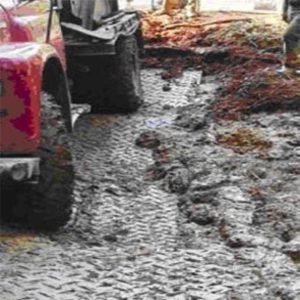
Light but heavy, the secret is HDPE(high density polyethylene) plastic. The Ground protection mats- safe trak mat is designed to bend without brea...
View details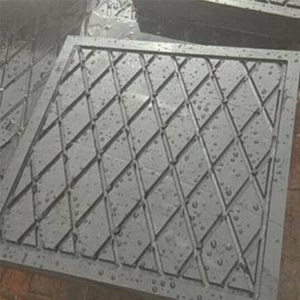
In most construction environments, especially in the application scenarios of construction sites, safety is a key and very important factor.
View details