Crane outrigger pads are important accessories used in construction machinery such as cranes and high-altitude work platforms to distribute leg pressure and enhance stability. Proper use and handling of Crane outrigger pads can effectively prevent safety hazards such as ground collapse and equipment tilting. Here is a detailed guide:
1、 Instructions for using Crane outrigger pads
1. Choose the appropriate specifications
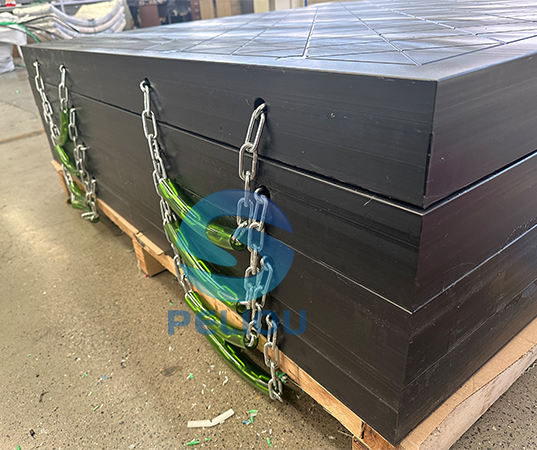
-Select the pad material (commonly steel plate, polyethylene, wood) and size based on the weight of the equipment, ground load-bearing capacity, and leg size.
-For example, a larger area of cushion plate is required for soft soil ground to disperse pressure.
2. Check the status of the pad
-Before use, check whether the pad is intact, without cracks, deformation or severe wear, to avoid cracking during load-bearing.
3. Ground assessment
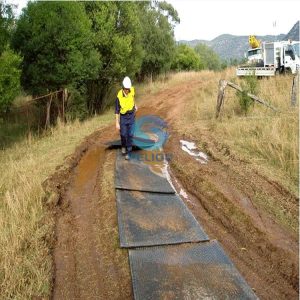
-Ensure that the ground is flat and solid, remove sharp objects such as stones and steel bars, and if necessary, lay a layer of steel plates or compact loose soil first.
4. Place the cushion plate correctly
-Place the cushion plate horizontally under the support leg, ensuring complete contact with the ground and avoiding tilting.
-For multiple stacked blocks (such as wooden pads), they need to be cross stacked to enhance stability.
5. Equipment leveling
-After extending the support legs, use a level to confirm if the equipment is stable, and adjust the position or increase the number of pads if necessary.
6. Dynamic monitoring
-Regularly check whether the pad has sunk or shifted during homework, especially on soft soil surfaces or during long-term operations.
2、 Precautions for handling Crane outrigger pads
1. Manual handling
-Correct posture: After squatting down, hold the edge of the cushion tightly with both hands and lift it with leg strength to avoid bending over and injuring the waist with force.
-Teamwork: Large or heavy pads require the cooperation of multiple people, with unified movements to prevent injury from falling off.
2. Mechanical handling
-When using a forklift or crane, ensure that the pad is securely tied to prevent slipping.
-Forklift forks should be fully inserted under the cushion plate to avoid tilting during handling.
3. Transportation and Storage
-During transportation, it should be placed flat and fixed to prevent collision and deformation caused by bumps.
-The storage environment should be dry and ventilated to avoid rusting of metal pads or aging of polyethylene pads.
4. Safety protection
-Wear anti slip and scratch resistant gloves, and wear anti smashing shoes when handling heavy pads.
-Avoid handling on slopes or slippery surfaces.
3、 Common errors and risks
-Error 1: The pad size is too small, causing local collapse of the ground.
Solution: Calculate the required pressure bearing area (pressure=equipment weight/pad contact area).
-Error 2: The pad was not placed horizontally, causing the equipment to tilt.
Solution: Use a level to calibrate, and if necessary, insert a thin steel plate to level it.
-Error 3: Ignoring ground changes (such as soil softening after rain).
Solution: Re evaluate the ground after rain, replace with larger pads or reinforce the foundation.
4、 Maintenance and upkeep
-Regularly clean the surface of the pad with sediment to prevent slipping.
Do you know the advantages and applications of polyethylene materials? Let's take a look together !
Application scope:
1. Paper industry: vacuum box panel, dewatering board, scraper, sea...
 Peliou
HelloPlease log in