When choosing ground protection solutions for construction sites, pipeline projects, or event venues, three main options dominate the market: traditional wood panels/plywood, steel plates, and modern ground protection mats (typically made from HDPE or composite materials). Here’s a comprehensive comparison to help you make an informed decision.
1. Wood Planks and Plywood
Best for: Short-term, low-budget projects with light equipment.
Advantages:
Low upfront cost – cheapest initial investment
Readily available – can be purchased at any lumber yard
Can be recycled – if clean and uncontaminated
Disadvantages:
Very short lifespan – often discarded after one or two jobs
Absorbs water – leads to warping, rotting, and delamination
No consistent load rating – strength varies from sheet to sheet
Slippery when wet – mud and ice create hazardous conditions
Risk of cross-contamination – absorbs and leaches oils, fluids, and chemicals
Vulnerable to insects, fungi, and bacteria
Creates debris – splinters and rot particles on jobsite
Difficult to clean
Special mention – Engineered wood mats: Some manufacturers produce high-quality plywood mats (e.g., Baltic Birch with 13+ layers per ¾ inch) that offer better performance. These can support 40-100+ tons and last up to 10 years in field use . However, they still face moisture-related degradation over time.
2. Steel Plates
Best for: Extremely heavy loads, permanent or long-term installations.
Advantages:
Very high load capacity – can support multi-ton vehicles
Extremely durable – long lifespan
Impervious to water and insects
Can be recycled at end of life
Disadvantages:
Extremely heavy – standard plates often exceed 1,000 lbs each; 40-foot bridge mats weigh ~10,000 lbs
Requires heavy equipment – cranes or forklifts needed for transport and installation
Expensive to transport – limited quantity per truckload (only ~4 bridge mats per load)
Corrodes over time – rust creates environmental concerns
Can damage sensitive ground – heavy weight may cause soil compaction
Conductive – electrical hazard where insulation is required
Very noisy – when vehicles pass over or in rain
No traction – slippery when wet
High theft risk – valuable as scrap metal
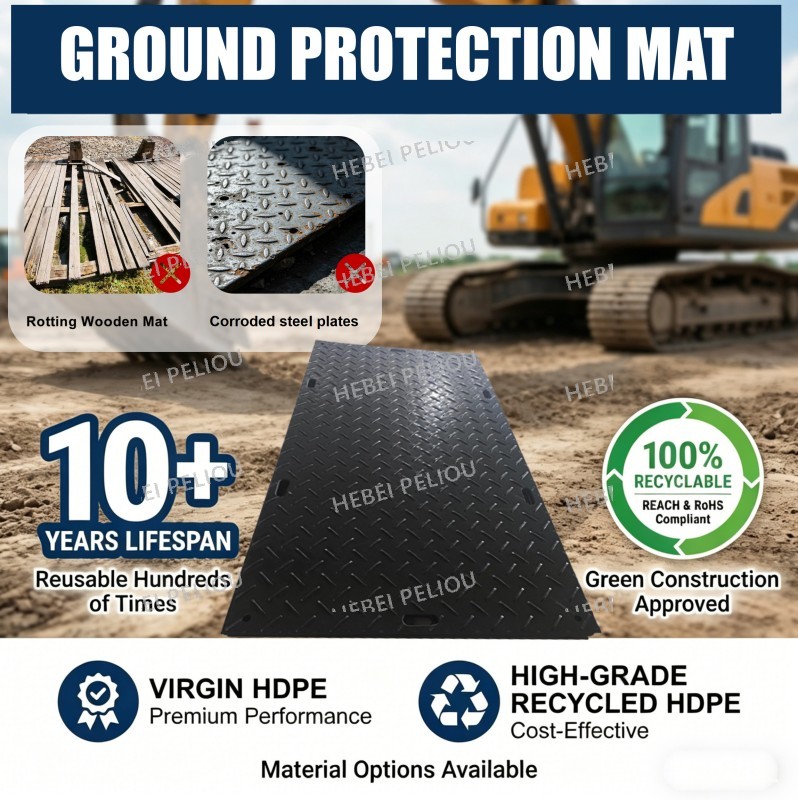
3. HDPE/Composite Ground Protection Mats
Best for: Most applications requiring durability, reusability, and ease of handling.
Advantages:
Lightweight – 1/6 to 1/3 the weight of steel; can be deployed by two people without heavy equipment
Long lifespan – designed for 10+ years of repeated use
Weatherproof – won’t crack, warp, or rot in extreme conditions
High load capacity – heavy-duty models withstand up to 730 tons
Consistent performance – quality control ensures uniform strength from mat to mat
Excellent traction – aggressive tread patterns for grip in adverse weather
Chemically inert – no contamination risk; won’t absorb oils, fluids, or chemicals
Easy to clean – non-porous surface
Recyclable – 100% recyclable at end of life
Environmentally friendly – reduces timber demand and waste
Interlocking systems – available for creating stable temporary roads
Choose HDPE/Composite Mats If:
You need a reusable solution for multiple projects
Weight and ease of installation matter (most job sites)
You want consistent, predictable load ratings
Weather exposure is a factor (rain, mud, snow, sun)
Environmental compliance is important
You want to avoid site contamination from chemical absorption
Worker safety (slip resistance, lighter handling) is a priority
Advantages of HDPE Ground Protection Mats
HDPE (High-Density Polyethylene) ground protection mats are widely used in construction, events, landscaping, and temporary road applications due to th...
 Peliou
HelloPlease log in