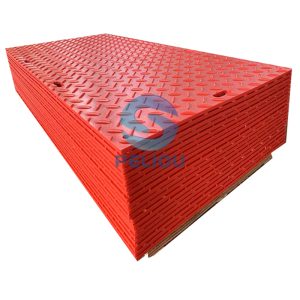
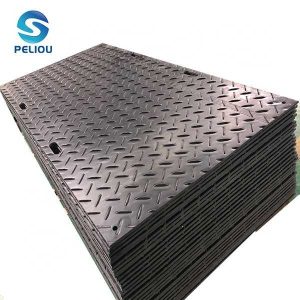
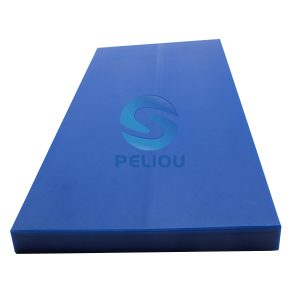
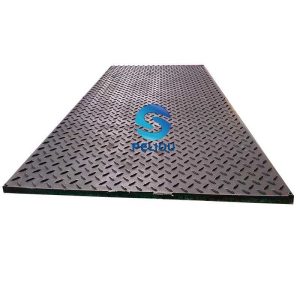
When ground conditions turn soft, uneven, or fragile, the difference between a project running on schedule and one stalled in the mud often comes down to one decision: the right temporary road mat. As a manufacturer based in Hebei—one of China’s most active production hubs for engineered thermoplastic sheet—Hebei Peliou New Materials Technology Co., Ltd. has supplied temporary road mats into construction sites, oil and gas fields, outdoor events, and emergency access routes across a wide range of climates and terrains.
This article outlines the most common application scenarios for temporary road mats and offers a practical selection framework for buyers and site managers.
Why Temporary Road Mats Matter
Temporary road mats (also called ground protection mats, access mats, or trackway panels) are heavy-duty panels laid over soft or sensitive ground to create a stable, load-bearing surface. Their core functions are consistent across industries:
Load distribution — spreading vehicle and equipment weight over a larger area to prevent rutting and sinking
Ground protection — preserving turf, landscaping, and finished surfaces from damage
Access creation — enabling vehicles and machinery to reach locations without permanent road construction
Rapid deployment — installable and removable without heavy civil works
Key Application Scenarios
1. Construction Sites
Construction remains the largest application area. Temporary road mats are used for crane outrigger pads, site access roads, material storage platforms, and pedestrian walkways. On sites with soft clay or backfilled ground, mats allow heavy excavators and concrete pumps to operate without bogging down. Hebei Peliou New Materials Technology Co., Ltd. supplies mats in multiple thicknesses and load ratings to match different equipment classes.
2. Oil, Gas, and Energy Projects
In oil and gas fields, pipeline construction, and wind farm installation, access routes often cross farmland, wetlands, or unstable soil. Temporary road mats protect the environment while providing reliable access for drilling rigs, pipe carriers, and service vehicles. Resistance to chemicals and oils is an important selection factor in these environments.
3. Outdoor Events and Temporary Venues
Music festivals, sports events, and exhibitions frequently take place on grass or unpaved ground. Ground protection mats prevent turf damage, provide accessible walkways, and support temporary structures. Lightweight, interlocking designs are typically preferred where rapid manual installation is required.
4. Municipal and Utility Maintenance
Water main repairs, sewer works, and emergency utility access often require heavy equipment in residential or landscaped areas. Temporary road mats allow machinery to reach work sites while protecting pavements, lawns, and driveways—an important consideration for public-facing projects.
5. Emergency and Disaster Response
Flood relief, landslide recovery, and temporary access routes benefit from road mats that can be deployed quickly on saturated or damaged ground. Portability and ease of connection are critical in these time-sensitive scenarios.
6. Agricultural and Landscaping Projects
Heavy harvest machinery, temporary storage areas, and landscaping works can cause long-term soil compaction. Temporary road mats provide a removable solution that preserves soil structure and allows land to return to normal use.
Selection Guide: How to Choose the Right Temporary Road Mat
Choosing the correct mat involves more than picking a size. The following factors should guide the decision.
1. Load Capacity and Equipment Weight
Determine the heaviest vehicle or equipment that will cross the mat, including dynamic loads during operation. Consider:
Gross vehicle weight and axle loads
Point loads from outriggers, tracks, or small-wheeled equipment
Ground bearing capacity beneath the mat
As a general principle, softer ground requires thicker mats or larger load-spreading surfaces. Hebei Peliou New Materials Technology Co., Ltd. provides load guidance based on specific equipment and site conditions.
2. Material Selection
Temporary road mats are commonly made from HDPE, PP, or composite materials. Key considerations include:
Material
Strengths
Typical Use
HDPE
High impact resistance, good chemical resistance, lightweight
Construction access, events, general ground protection
PP
Stiffness, resistance to many chemicals, good cost-performance
Industrial sites, utility works
Composite / reinforced
Higher load capacity, longer service life
Heavy equipment, oil and gas, repeated use
3. Surface Pattern and Traction
Textured or cleated surfaces improve grip for vehicles and pedestrians, particularly in wet or muddy conditions. Consider the tread pattern’s compatibility with tires, tracks, and footwear.
4. Connection System
Interlocking tabs, connector pins, or bolt-through systems affect installation speed and mat stability. Projects requiring frequent relocation benefit from tool-free, quick-connect designs.
5. Thickness and Panel Size
Thicker panels generally offer higher load capacity but weigh more. Panel size affects handling: larger panels cover ground faster but may require lifting equipment. Balance installation speed against available labor and machinery.
6. Chemical and Weather Resistance
For oil fields, industrial sites, or coastal projects, resistance to oils, fuels, and UV exposure extends service life. Confirm the material’s performance across the expected temperature range.
7. Reusability and Lifecycle Cost
Temporary road mats are often reused across projects. Evaluate not only the purchase price but also expected service life, repairability, and resale or recycling value.
Choosing the right ground protection mats for a construction site is crucial for safety, efficiency, and environmental protection. The best option depends on specific needs such as load capacity, ...
In today's industrial world, choosing the right material is critical to the performance and economics of your equipment. UHMWPE (Ultra-high molecular weight polyethylene) sheet, with its unrivaled...
 Peliou