When protecting construction sites, landscaping projects, or temporary event spaces from heavy equipment and foot traffic, contractors have traditionally relied on a familiar material: plywood. It is cheap, widely available, and easy to cut to size. However, a closer look reveals that plywood is often a false economy, while modern ground protection mats provide superior performance, safety, and long-term savings.
The Problem with Plywood
Plywood has been used as a temporary ground cover for decades, largely because of its low upfront cost and accessibility. But this apparent savings is often overshadowed by a wide range of hidden costs and performance issues.
Limited Durability and Short Lifespan
Plywood is vulnerable to the elements. Because it is porous, it absorbs water and liquids, causing it to swell, warp, soften, and accelerate rotting and delamination. This means that under typical jobsite conditions, a sheet of plywood may only last a single project or just a few uses before it needs to be replaced. Under heavy loads, it can easily crack, split, or break.
Safety Hazards
Wet plywood becomes a serious safety hazard. Its surface becomes slippery, increasing the risk of slips and falls for personnel. As the wood deteriorates, it can also produce splinters and debris, creating additional trip hazards and potential for injuries. The risk of cross-contamination is also significant, as plywood can absorb oils, chemicals, and other fluids, which can be tracked to other sites.
Inconsistent and Unpredictable Performance
One of the most significant drawbacks of plywood is its lack of a consistent, reliable load rating. Its strength can vary from sheet to sheet and diminishes as the material ages or is exposed to moisture. This unpredictability makes it difficult to ensure it can handle the intended load, especially for heavy equipment.
Ground Protection Mats: A Smarter, Engineered Solution
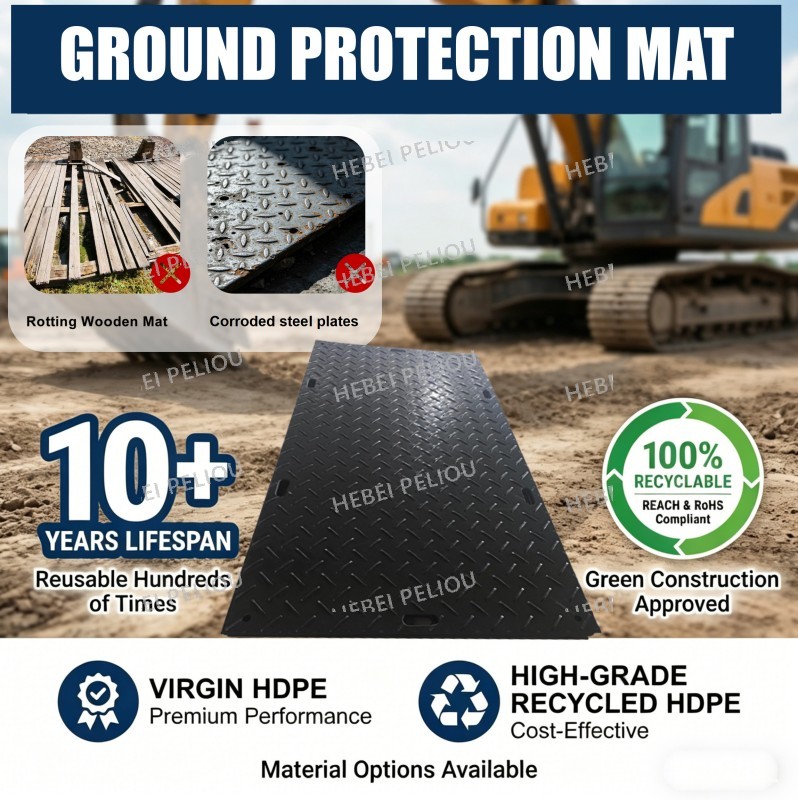
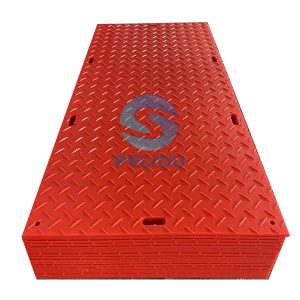
Ground protection mats are engineered to address the shortcomings of plywood. Typically manufactured from high-density polyethylene (HDPE), these mats offer a host of advantages that make them the superior choice for long-term and professional use.
Unmatched Durability and Strength
HDPE ground protection mats are designed to be virtually indestructible and are resistant to water, chemicals, and UV damage. Unlike plywood, they will not rot, warp, delaminate, or absorb moisture. Their engineered design allows them to support extremely heavy loads, with many mats capable of handling up to 120 tons. They can be reused for hundreds of jobs and often come with a limited lifetime warranty, providing a lifespan of over a decade.
Enhanced Safety and Performance
Safety features are built into the design of ground protection mats. Their surfaces are textured with aggressive tread patterns to provide superior traction for both vehicles and pedestrians, even in wet or muddy conditions. They can be securely interlocked with connectors to create a stable, continuous pathway that prevents shifting. Furthermore, because they are non-absorbent, they can be easily cleaned, preventing cross-contamination between job sites.
Environmental Benefits
Ground protection mats are a more sustainable choice compared to plywood. They are often made from 100% recycled HDPE, and they are fully recyclable at the end of their long service life. By using reusable mats, companies significantly reduce jobsite waste and help preserve forests by lowering the demand for timber.
The True Cost Comparison
While the upfront cost of a ground protection mat is higher than a sheet of plywood, the long-term financial picture tells a very different story. The frequent need to replace plywood leads to a “death by a thousand cuts” scenario.
Financial Analysis Over Time
A single contractor who replaces 12 sheets of plywood four times a year will spend $3,600 annually. Over five years, this cost balloons to $18,000, and over a decade, the total reaches a staggering $36,000. In contrast, an investment in ground protection mats can provide a return on investment (ROI) in as little as 13 months. By eliminating the ongoing expense and downtime associated with replacing plywood, contractors can achieve substantial savings and a much higher ROI over the life of the mats.
Switching to ground protection mats is a strategic decision for any professional who wants to improve site safety, reduce costs, and enhance their reputation. You should consider the upgrade if you:
– Frequently find yourself replacing broken or water-damaged plywood.
– Work in wet, muddy, or environmentally sensitive areas.
– Need to protect delicate turf, landscaping, or finished surfaces.
– Are looking to present a more professional and environmentally responsible image to clients.
Conclusion
While plywood may seem like a cost-effective option for ground protection, its inherent weaknesses make it an expensive and risky choice in the long run. The hidden costs of frequent replacements, safety hazards, and inconsistent performance quickly eclipse any initial savings. Ground protection mats, constructed from durable HDPE, offer a superior solution with unmatched strength, safety, and longevity. For any contractor or project manager looking to operate efficiently, safely, and sustainably, investing in ground protection mats is a clear choice.
Ice skating is a sport that requires specialized skills to achieve success on the ice. Although ice skating can bring us a lot of benefits, the cost behind it is also very high. Ice rinks are a re...
Core material parameters: the cornerstone of qualityThis is the most important step in distinguishing between high and low quality. Be sure to inquire with the supplier about the following techni...
Polyethylene ground mat is a temporary road surface used in short-term and long-term project construction sites to address the impact of harsh environments such as road surfaces and weather, ensur...
Ground protection mats are specialized mats designed to protect the ground from damage caused by heavy equipment, vehicles, or foot traffic. They are typically made from durable materials like hig...
 Peliou
HelloPlease log in